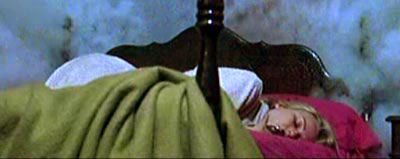
First, a little background. I remember one dream I had when I was a kid where it became very obvious that I was in a nightmare — I was being hunted in a house by a couple of people that used to be my friends. Desperate to wake up, and since I knew it was impossible to die in a dream, I tried to slit my wrists (which didn't work in the dream — I was unable to cut my skin) and woke up soon after.
Now to Mulholland Drive: what if when Diane sees the old people coming after her she thinks she's still dreaming, and her suicide is her way of trying to wake herself up? If you take this a step further — what if she really was still dreaming, and the first dream was a dream within a dream? This would help explain the Silencio woman appearing after she's dead, and would also explain the old people a bit better than temporarily losing her mind. I mean, I got no indication that she was ever schizophrenic or anything like that. Even after traumatic incidents, I don't think it's common to suddenly have visions of old people attacking you.
I'm saying that as soon as the blue-haired lady says "Silencio," she wakes up. This also fits with what I've heard of "Silencio" being said before a play starts. It could be that Diane's life (somewhat of a living nightmare itself) is about to start up again with her waking, and it's the dream images that are being told to stop.
The first dream fits Freud's theory that dreams are wish fulfillment perfectly. She dreams of everything she wishes would happen. She realizes she's dreaming in the Silencio club, and then she "wakes up" when we thought she did — but she's still dreaming, she just isn't aware of it anymore. This part serves more to tell the viewers the true story as well, but it's all still a dream. Then she either dreams of her suicide because it's something she's wishing for, or she realizes she's still dreaming and, like I suggested above, her "suicide" is an attempt to wake herself up. — JordanCollier