The film is not, at its core, a dream narrative. It depicts characters exchanging their souls for altered realities — and a devil who collects on those bargains at Club Silencio. — Tenebrae13
Scenario 1
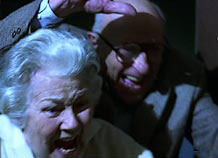
Diane arranges Camilla's murder. Afterwards, a devil figure appears and offers to rewrite history — to give Diane another chance, a better life. The elderly demonic couple terrorise Diane into suicide, which enables her rebirth as the innocent Betty. The lovers reunite in this new reality. But at Club Silencio the devil arrives to collect: the false world collapses, Betty and Rita's identities dissolve, and the debt is paid.
Scenario 2
Rita already holds a devil's bargain before the film begins — symbolised by the blue key she carries. When she opens the blue box at Silencio, reality restructures around her: she becomes Camilla, with the life and success she desired. Betty, displaced, transforms into Diane and is left to make her own desperate deal for a better existence. The loop tightens.
Evidence
- The elderly couple function as demonic agents. At the film's opening they escort Betty with apparent warmth; at its close they crawl from the blue box as miniature monsters sent to destroy her.
- The bum behind Winkie's, the figures glimpsed behind glass, and the magician at Club Silencio all facilitate or oversee the contracts.
- The "HELL" street sign spotted by Betty and Rita on the way to Club Silencio confirms the film's underlying geography: Hollywood is Hell, and Silencio is where the devil receives his due.
- Lynch has returned to the theme of supernatural dealing across multiple films. Mulholland Drive focuses on the tragedy of essentially good people making ruinous pacts — doomed regardless of their moral standing.